
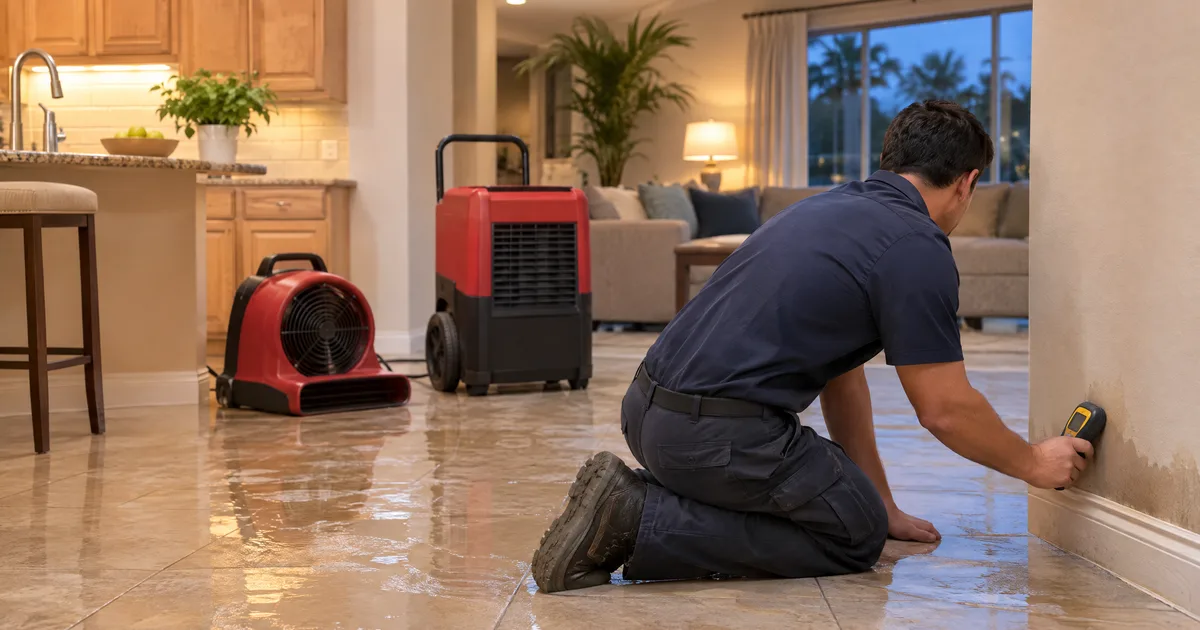
After water damage, keep out of standing water near outlets or appliances, shut off the water at the main valve if you can reach it safely, and call a water damage restoration company. Where it's safe to walk, photograph every wet room before you move anything, then lift valuables, rugs and electronics off the floor. Leave the drying to a crew with moisture meters, because on most jobs some of the water is hidden where you can't see it.
What to do first when your house floods
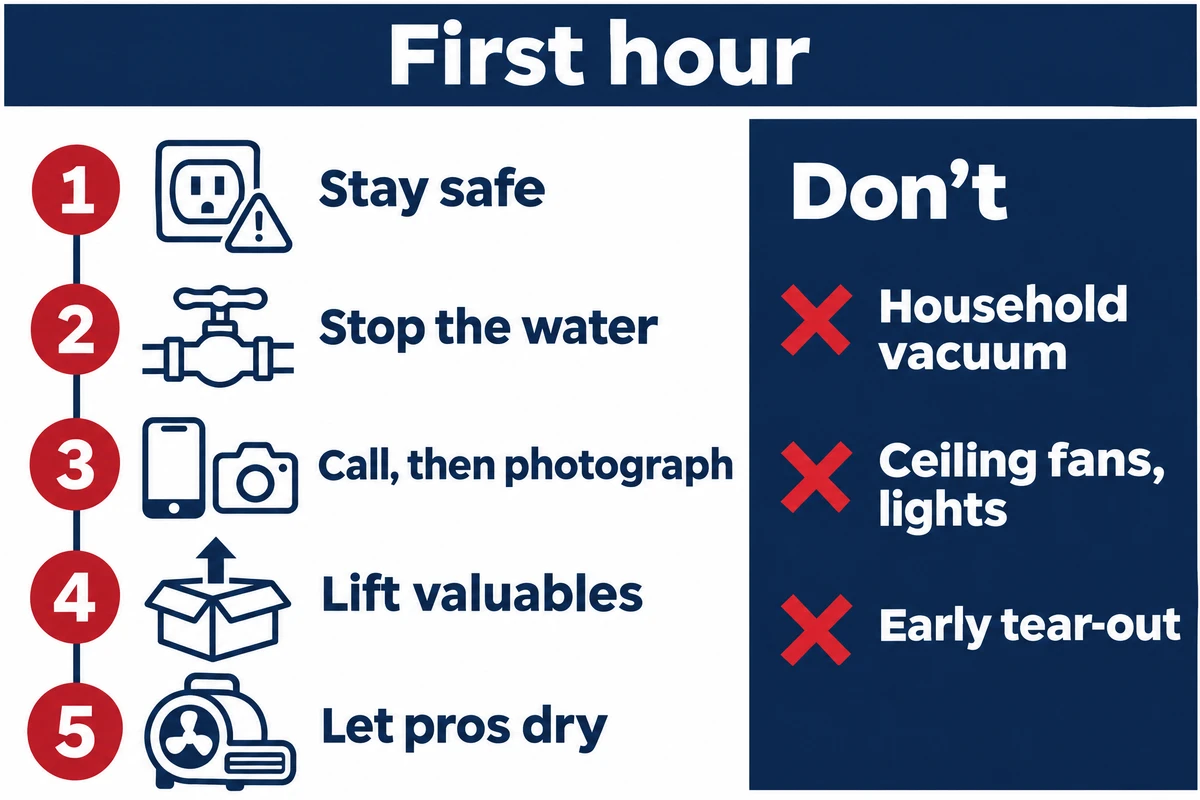
Make the area safe first and stop the water second; everything else can wait a few minutes.
Water and electricity are the real danger in the first hour. Keep out of standing water that has reached outlets, power strips, cords or plugged-in appliances. If you can get to the breaker panel without standing in water, switch off the breakers for the wet rooms. If you can't, leave them alone and tell us when you call. If a ceiling is sagging or dripping, keep people and pets out of that room. A wet ceiling can come down without warning.
Next, stop the water. If a toilet, sink or washing machine is leaking, close its shut-off valve if you can reach it safely. If you can't stop the leak there or find its source, close your home's main water valve.
If water is coming up through the floor, or you feel a warm spot underfoot, you may have a slab leak. Slab leaks are what we're called to most often. Close the main valve if you can reach it safely, and tell us what you're seeing when you call.
Who should you call first after water damage?
Call a water damage restoration company first, so you understand the damage before you talk to your insurance company.
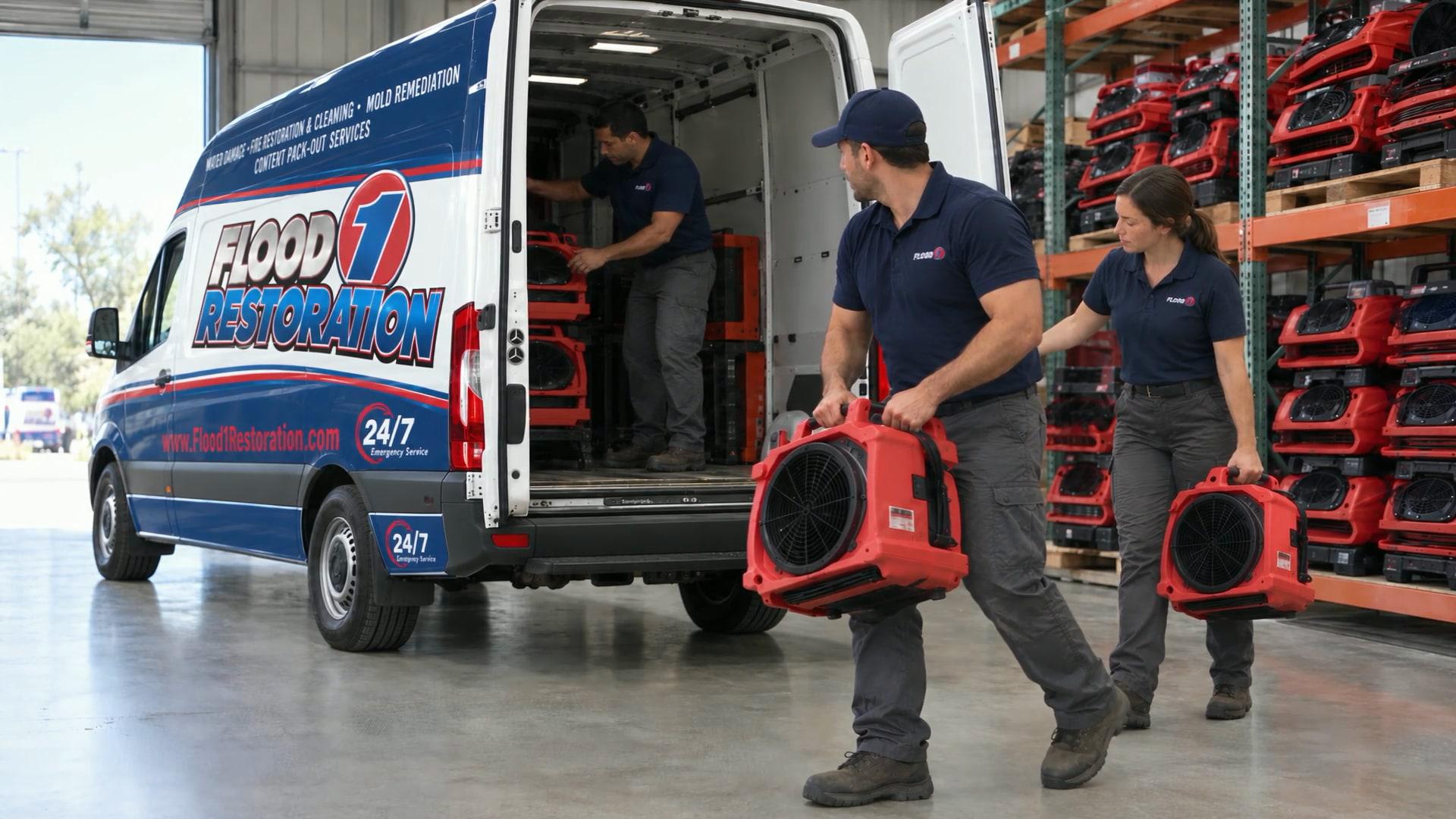
When you call Flood 1, the first thing you'll hear is this: "First of all, everything will be fine. Second, we set an appointment for an immediate inspection." A real person answers (888) 432-4373 day and night. We offer a 60-minute response guarantee. Our crews typically arrive in 45 to 60 minutes.
To set up that inspection, the office will ask for:
- your address, phone number and email
- the year your home was built
- your insurance company and claim number, if you already have one
Why not call your insurer first? Right after a leak, most people don't yet know what caused it, what's wet or how far the water has spread. In our experience, homeowners rarely know what to say on that first call. An inspection answers those questions.
At the inspection, our technician compares your deductible with the likely cost of the job, so you can decide whether to file a claim or pay out of pocket. Typical Flood 1 mitigation, the extraction and drying stage, runs $3,000 to $7,000. Repairs are estimated separately, and work starts only after you sign a work authorization. Whether a loss is covered is always your insurer's decision. See how we help with insurance claims for what happens after the inspection.
How to photograph water damage and protect your things
Where it's safe to walk in, take photos and video of every wet room before you move anything, then get your valuables off the floor.
Pictures taken now show the damage as it was. Start wide, with each room from the doorway, then move in close. Capture the source if you can see it, such as a split supply line or a leaking water heater. Then photograph the water line on the walls, wet carpet, swollen baseboards and anything damaged. A slow video walk-through on your phone covers a lot.
Then protect what you can:
- Lift valuables, papers, photos and electronics onto a table, a counter or a higher floor. Unplug electronics only if the plug and outlet are dry and you're standing somewhere dry.
- Roll up area rugs and move them off wet floors.
- Slide foil or wood blocks under the legs of furniture on wet carpet, so stain and rust don't soak into it.
Leave anything heavy where it is. Our crew handles pack-out, moving and protecting your contents so drying can start.
What not to do after water damage
Don't use a household vacuum on water, don't switch on ceiling fans or lights under a wet ceiling, and don't tear anything out before it's photographed.
- Household vacuums. Regular vacuums aren't made for water and can be a shock hazard.
- Ceiling fans and lights. Water in a ceiling can reach the wiring and fixtures. Leave those switches off, and stay out from under a sagging ceiling.
- Early tear-out. Photograph wet drywall and flooring before anything comes out, and let the crew's moisture readings decide what has to go. Without readings, it's easy to remove too little and leave wet material behind, or to remove more than you needed to.
And don't wait for the floor to look dry. Water keeps moving into walls and subfloors, and drying sooner saves more of your home.
Can fans dry out water damage?
Not fully: fans dry the surfaces you can see, but water soaks into wall cavities, under cabinets and into the subfloor, where moving air can't reach it.
Most of our jobs have hidden damage. Drywall wicks water up from the floor, and water runs under baseboards and cabinets. Our crews find it with moisture meters and thermal cameras, then map how far it has spread. If there's standing water, emergency water extraction comes first, so drying can start.
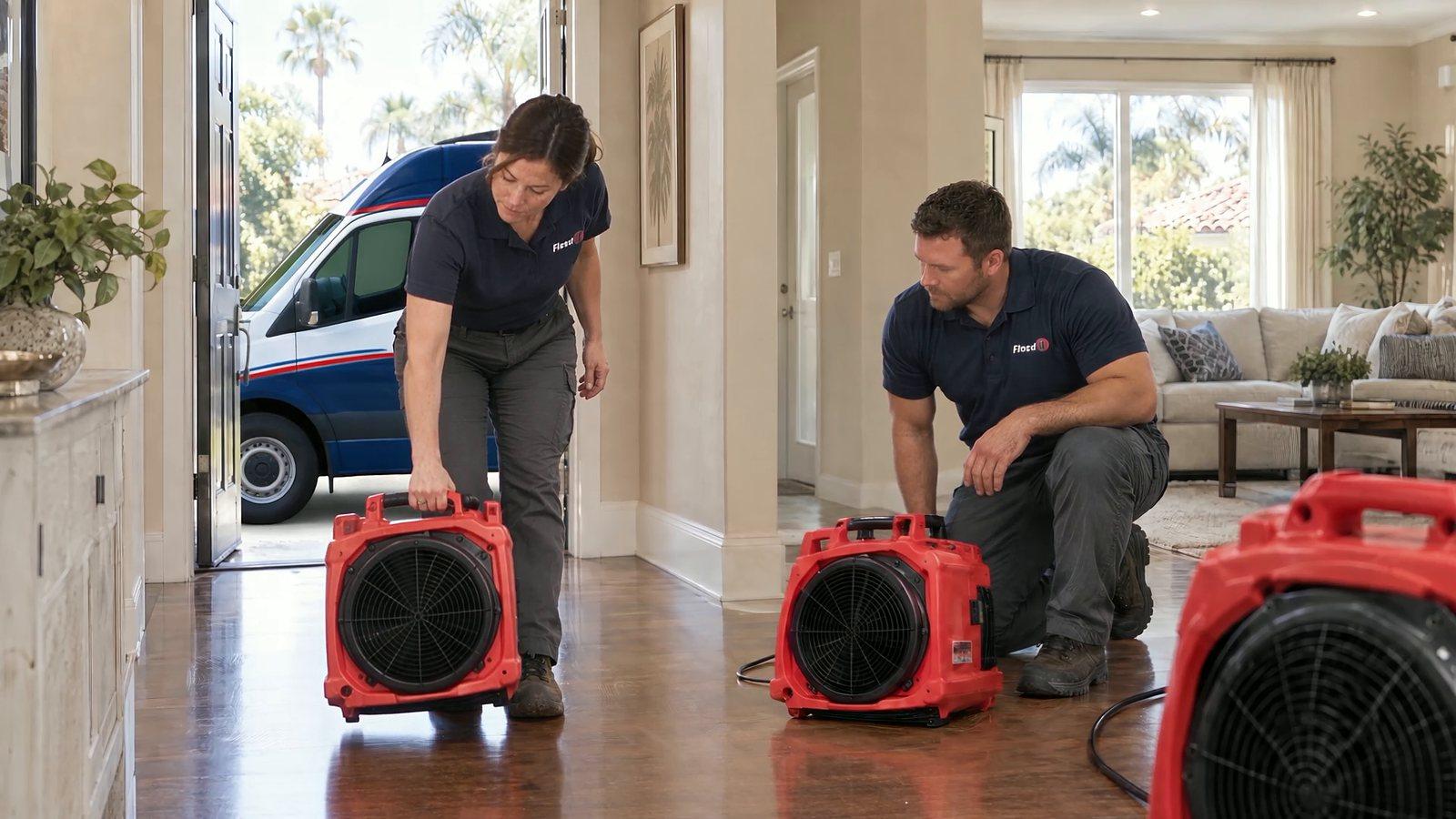
Then air movers and dehumidifiers dry the whole structure, not just the surface. We take readings every day and remove equipment only when walls, floors and framing are back to normal levels. On a typical Flood 1 job, drying takes 3 to 4 days. Fans on their own can leave the inside of a wall wet, and a musty smell after a leak is a common early sign of hidden moisture or mold growth. Our water damage restoration process runs from that first reading to the final repairs.
When to call Flood 1 for water damage restoration
Call as soon as the water is stopped, or right away if you can't stop it, it's coming through a ceiling, or it's from a sewer backup or outside flooding.
You don't need to know how bad it is or what kind of water it is. That's what the inspection is for. Our IICRC certified technicians extract the water, dry the structure and confirm it's dry with readings. Then our reconstruction team repairs what can't be saved. One call does it all, from the first bucket to the last coat of paint.
Flood 1 has been local since 1997. We're licensed, bonded and insured under CA License #911353, and we serve homes and HOA communities across Riverside, San Diego and Orange counties. If you have water on the floor right now, call (888) 432-4373.
FAQ
Should I call my insurance company or a restoration company first?
Call a restoration company such as Flood 1 first, so you know what's wet and how far the water has spread before you talk to your insurer. Homeowners rarely know what to say on that first call. Whether a loss is covered is always your insurer's decision.
How fast can Flood 1 get to my home?
A real person answers 24/7. We offer a 60-minute response guarantee, and our crews typically arrive in 45 to 60 minutes.
How long does it take to dry out a house after water damage?
On a typical Flood 1 job, drying takes 3 to 4 days. We take moisture readings every day and remove equipment only when walls, floors and framing are back to normal levels.
Can we stay in the house while you work?
Usually, yes. The equipment is loud and runs around the clock, but most families stay home. If there's sewage or a large affected area, we'll tell you if it isn't safe to stay.
How much does water damage restoration cost?
Typical Flood 1 mitigation, the extraction and drying stage, runs $3,000 to $7,000, depending on how much water there is, what kind it is and which materials are wet. Repairs are estimated separately once drying is done, and work starts only after you sign a work authorization.
How soon can mold grow after water damage?
Mold can start growing within 24 to 48 hours on wet drywall, carpet pad and wood. Fast extraction and drying is the best way to prevent it.
One team for the whole recovery
Let's get your property back on track.
Emergency help for homeowners and managed communities, 24 hours a day.